
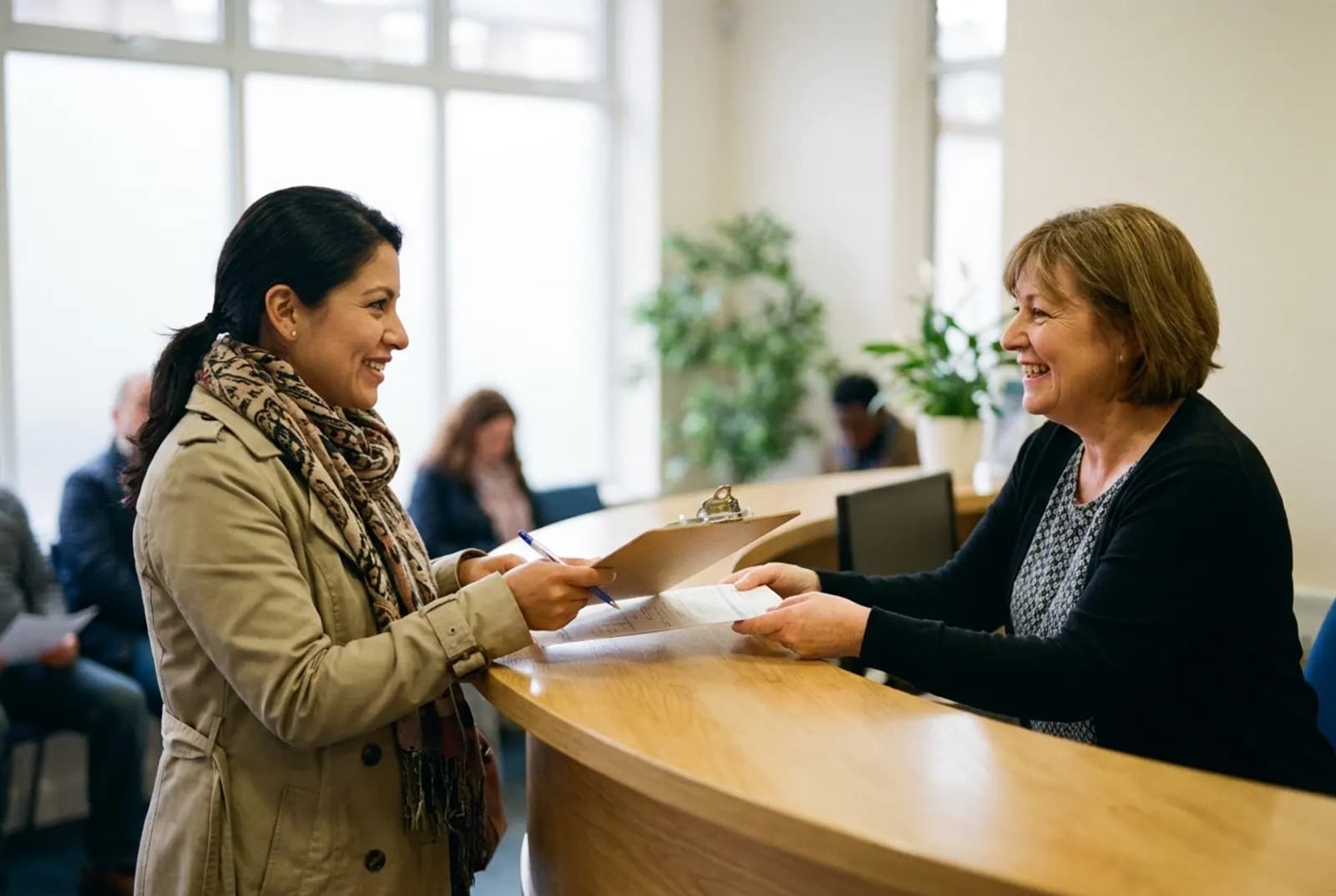
What a GP is, and why to register today rather than when you're ill
The GP (General Practitioner) is your family doctor and the front door to almost all of the NHS: they treat you, prescribe, and refer you to a specialist if needed. Without a GP, every ache ends up in A&E with hours of waiting.
Registering is FREE and doesn't depend on your immigration status. And the advice we repeat most: do it in your first week here — the morning you wake up with a fever is not the time to go looking for a surgery.
What they CANNOT ask you for (and many people think they can)
The NHS says it in writing: to register with a GP you do NOT need a passport or ID, you do NOT need proof of address and you do NOT need to prove your immigration status. You don't need an NHS number either: you're given one when you register.
- If you rent a room and no bill is in your name: you can still register, even using the surgery's own address.
- Real-life warning: many receptions ASK for a passport or a bill out of habit. They can ask; they cannot REQUIRE it or turn you away for not having it. If they insist, say calmly: 'The NHS says I do not need ID or proof of address to register' — and show them the official NHS page.
- If a surgery refuses you, it must explain why in writing within 14 days. If you think you were refused for lack of papers, call NHS England: 0300 311 22 33.
Official links: How to register with a GP (NHS) · NHS entitlements for migrants (GOV.UK)
Registering, step by step
Ten minutes, from your phone:
- 1. Find your nearest surgery at nhs.uk → 'Find a GP' (enter your postcode). Pick one that's 'accepting new patients'.
- 2. Register online at nhs.uk → 'Register with a GP surgery' (the official NHS service), or ask the surgery for the paper form (GMS1). Both routes are valid.
- 3. Fill in your details and your health info (medication, allergies). If you don't have an NHS number, leave it blank: one will be assigned.
- 4. Within a few days you get confirmation. Download the NHS App: that's where you'll book appointments, see prescriptions and your NHS number.
- 5. If you're registering your children, they can ask for something showing you're their parent or guardian.
Official links: Find a GP · Register with a GP (NHS) · The NHS App
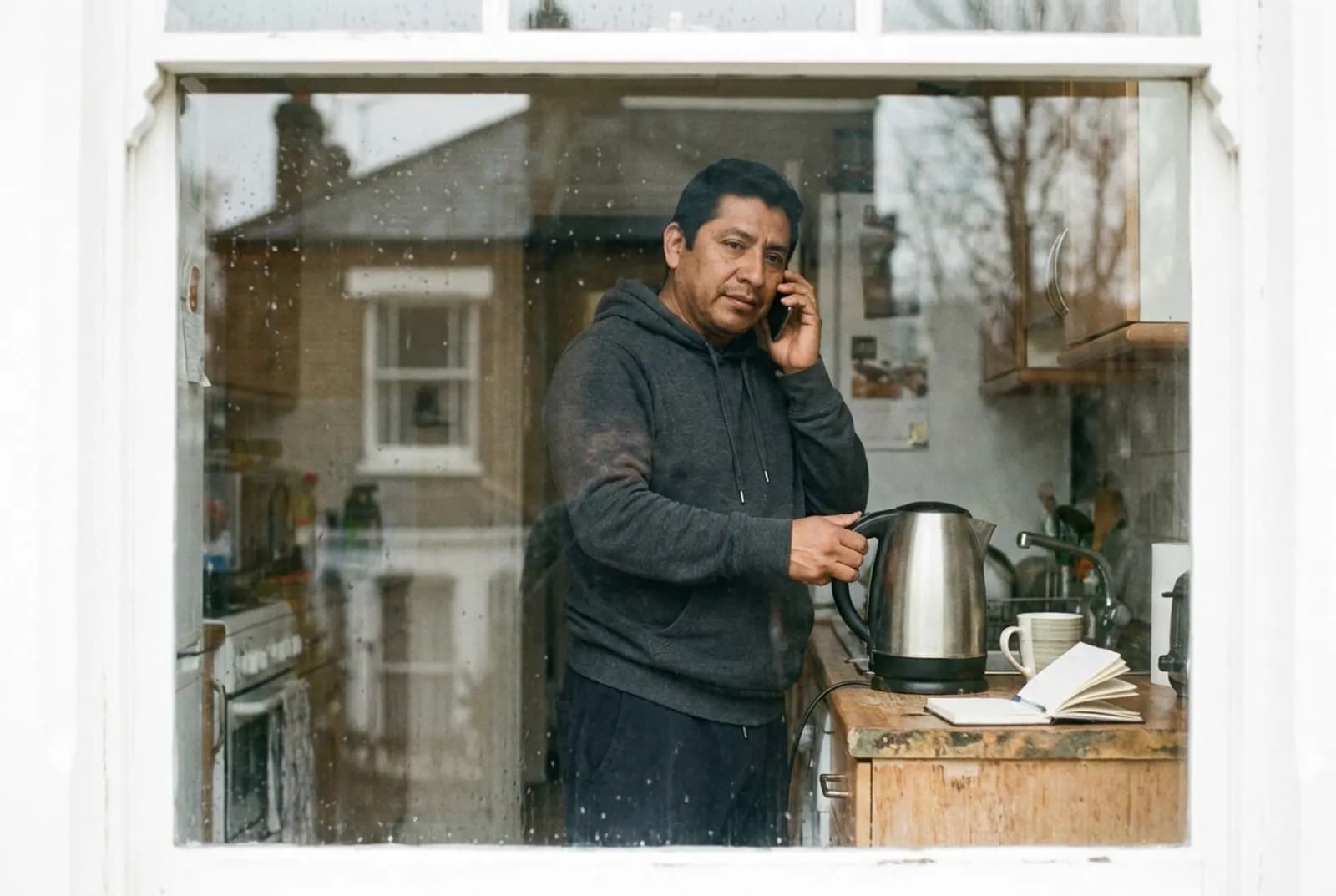
Booking an appointment (the 8am trick)
Every surgery has its own system, but the general rule is: same-day appointments are released first thing. Call at 8:00 sharp or use the surgery's online form (eConsult / NHS App) and they reply the same day.
- Urgent but not life-threatening (out of hours, or no appointment): call 111, free, 24 hours. They tell you where to go.
- A real emergency (chest pain, trouble breathing, heavy bleeding, serious accident): 999 or A&E.
- Minor conditions (sore throat, urinary infection in women, earache, infected insect bites, shingles, impetigo, sinusitis): go straight to the PHARMACY. Under 'Pharmacy First' the pharmacist treats and prescribes without the GP.
Official links: NHS 111 online · What pharmacies can do (Pharmacy First)
What if my English isn't good enough?
You have the right to a FREE interpreter. Ask when you register ('I need a Spanish interpreter') and each time you book: the surgery arranges it, by phone or in person. Don't bring your child as translator: it's not fair on them or safe for you.
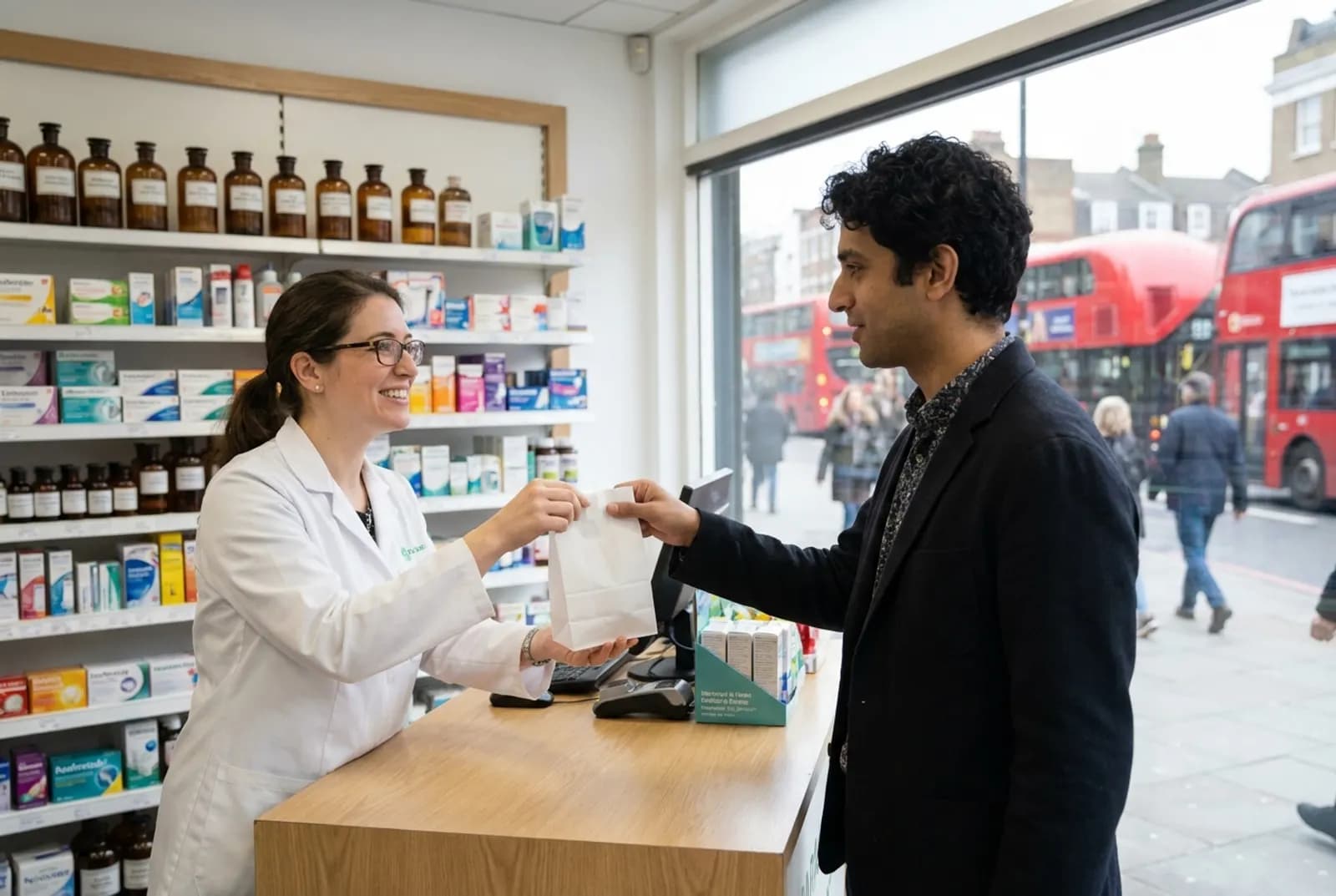
What it costs: free appointments, £9.90 prescriptions
Seeing the GP is free for everyone. What you pay for in England is the prescription: £9.90 per ITEM (frozen for 2026/27). If you take several medicines a month, a prepayment certificate (PPC) pays off: £32.05 for 3 months or £114.50 for a year, unlimited items.
Free prescriptions: under-16s (and 16–18s in full-time education), over-60s, pregnant women and mothers with a baby under one (with the maternity certificate), some long-term conditions and people on certain benefits. Ask at the pharmacy: a lot of money is lost by not knowing.
Official links: Prescription charges (NHS) · Prepayment certificate (PPC)
Frequently asked questions
Can I register without papers or with an expired visa?
Yes. GP registration and appointments don't depend on your immigration status, and the surgery can't demand proof. Your medical information is confidential.
How long does registration take?
Usually a few days; sometimes you're accepted the same day. If you need care sooner, you can ask to be seen as a temporary patient or call 111.
What if I move to another area?
You register with a new surgery near your home; your records transfer automatically. Each surgery covers an area (catchment area): if you move out of it, they may ask you to change.
Is the dentist through the GP too?
No. NHS dentists are separate, with their own registration and prices. The GP is for general medicine; opticians and dentists have their own routes.